

2025.02.07

Retrieval-Augmented Generation: Leveraging LLM with the best TCO

Share:

Introduction
Generative AI (Gen AI) and large language models (LLMs) are revolutionizing industries with applications in language understanding and automated content creation. However, their growing complexity demands cost-efficient solutions. Retrieval-Augmented Generation (RAG) deals with the challenges by combining LLMs with external data retrieval to enhance accuracy and optimize total cost of ownership (TCO). This blog explores RAG’s features, benefits, and hardware requirements.

What is Retrieval-Augmented Generation (RAG)?
Retrieval-Augmented Generation is a technique to address the limitations of standalone LLMs for enhanced accuracy and reliability of the AI responses. Traditional LLMs rely solely on pre-trained knowledge, which can lead to outdated or inaccurate responses, especially when dealing with dynamic queries. RAG overcomes these challenges by integrating a retrieval mechanism that retrieves relevant data from external sources before generating the answer. This approach makes generated responses align with the custom-built knowledge base.
LLM-with-the-best-TCO-02-1024x701

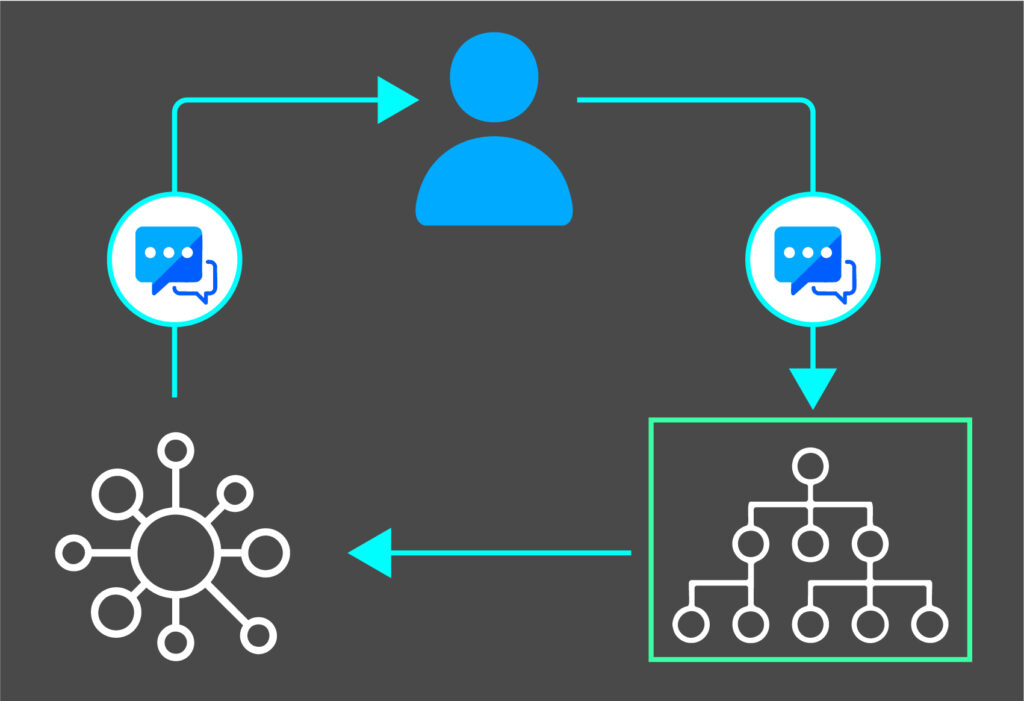
The process begins with diverse data sources including enterprise data being ingested and processed to create a structured knowledge base. When a user submits a query, the system retrieves and re-ranks relevant vectors. The most relevant context is then combined with the large language model to generate prompt response and return back to the user.

Key Features and Advantages of RAG
1. Dynamic Knowledge Integration for Improved Accuracy:

RAG enhances LLM performance by dynamically incorporating the most reliable and timely knowledge base, allowing it to provide more accurate and relevant responses.
2. Enhanced Data Privacy for Improved Security:
By querying private, secure databases during inference, sensitive information is processed locally without being shared with third party LLMs. This ensures robust privacy and minimizes exposure to external risks.
3. Cost Saving:
RAG offers a cost-effective approach to LLM customization. With retrieval mechanism, there is no need to set up extreme large-scale GPU systems for re-training LLMs which significantly reduce computational costs and time.

Hardware Requirements for RAG
To fully leverage RAG, robust hardware infrastructure is essential. Here are some key components:

1. High-Performance CPUs:
RAG requires CPUs capable of handling intensive inference tasks and high I/O throughput for data retrieval. Multi-core, high-frequency processors with the support of AVX-512 or newer instruction sets are ideal.
2. GPUs for Real-Time Inference:
While the retrieval process can be CPU-intensive, the generative tasks benefit significantly from GPU acceleration. GPUs with large memory bandwidth help meet advanced performance and low latency for LLM inference.
3. Optimized Data Access and Latency:
RAG benefits from fast storage solutions like NVMe SSDs for low-latency, high-throughput data access, coupled with high-speed networking to minimize latency during data retrieval.

AEWIN provides reliable systems powered by the latest CPU including Intel Xeon 6 and AMD Turin with the flexibility to support GPU cards, high throughput NICs, and high-speed NVMe SSDs. All solutions are optimized for power efficiency and thermal management for enabling RAG applications with the best TCO.

Summary
RAG combines dynamic data retrieval with LLMs to deliver accurate, cost-effective AI inference. By leveraging an up-to-date knowledge base, RAG is a transformative approach to achieving efficient AI deployments. As an experienced server provider, AEWIN is ready to support the new wave of innovation with our reliable and scalable Edge AI platforms.

Related News

Building Secure and Efficient On-Prem AI Infrastructure
2026.07.02

Building Secure and Efficient On-Prem AI Infrastructure

As Generative AI, AI Agents, and enterprise AI applications continue to expand, organizations are increasingly looking beyond the cloud to deploy AI closer to their data. Driven by growing concerns over data sovereignty, security, latency, and long-term operating costs, on-premises AI infrastructure has become a strategic choice for enterprises seeking greater control, performance, and scalability.

Rack-Scale AI Infrastructure: Maximizing Performance, Efficiency, and Scalability for the AI Era
2026.06.30

Rack-Scale AI Infrastructure: Maximizing Performance, Efficiency, and Scalability for the AI Era

Driven by the explosion of Gen AI, Agentic AI, and the massive datasets behind them, computing infrastructure is evolving from standalone servers to rack-scale architectures. Modern AI workloads require a tightly integrated combination of computing, networking, storage, and cooling solutions to deliver maximum performance and efficiency. Future-Ready AI Infrastructure has become the foundation for the AI Era.

Enhancing Network Resilience with AEWIN Gen4 LAN Bypass
2026.06.30

Enhancing Network Resilience with AEWIN Gen4 LAN Bypass

Traditional LAN bypass focuses on keeping traffic flowing when a system goes down, but modern deployments require greater flexibility to balance availability and security. AEWIN Gen4 LAN bypass builds on the Gen3 foundation by introducing enhanced traffic control mechanisms to enable network behavior to better align with real-world operational demands.

Inquiry Cart

total 0 items

Compare

total 0 items

Email Subscribe

Verification

Click the numbers from smallest to largest.

We use cookies to allow our website to work properly, personalize content and advertising, provide social media features and analyze traffic. We also share information about your use of our site with our social media, advertising and analytics partners

Manage Cookies

Privacy Settings

We use cookies to allow our website to work properly, personalize content and advertising, provide social media features and analyze traffic. We also share information about your use of our site with our social media, advertising and analytics partners

Privacy Policy

Manage Consent Settings

Essential Cookies

Accept All

The website cannot function without these cookies and you cannot switch them off on your system.

These cookies are typically set only in response to an action you perform (i.e. a service request), such as setting privacy preferences, logging in, or filling in a form.

You can set your browser to block or prompt you for these cookies, but this may prevent some site features from working.

Marketing Cookies

Marketing cookies are used to track visitors' journey through our website. The purpose is to display advertisements that are relevant or appealing to the individual user and are therefore more important to the publisher or third-party advertiser.

Targeting Cookies
These cookies are set through our site by advertising partners. These companies may use cookies to build a profile of your interests and show you relevant adverts on other sites. They only need to recognise your browser and device to work. If you do not allow these cookies, you will not experience targeted advertising across different websites.

Social Media Cookies
These cookies are set by a range of social media services that we have added to our site to enable you to share our content with your friends and networks. They can track your browser across other websites and build a profile of your interests. This may affect the content and messages you view when you visit other websites. If you do not allow these cookies, you may not be able to use or view these sharing tools.