

Establishing a Trusted Hardware Foundation for Confidential AI
Introduction
As AI adoption expands across industries, organizations are processing larger amounts of sensitive data and proprietary models to power AI applications. At the same time, evolving AI regulations and data protection requirements are raising expectations for security, privacy, and trust. This is driving greater demand for Confidential AI, which helps strengthen security of data and models while enabling continued AI innovation.
Confidential AI and Its Key Benefits
Confidential AI enhances the security of AI workloads by protecting data and models during processing. It safeguards information used in AI training, fine-tuning, and inference. By limiting unauthorized access to data, security risks can be reduced as organizations integrate AI into business-critical operations. In addition to data protection, it helps defend AI models against theft, tampering, and misuse, preserving valuable intellectual property.
Furthermore, Confidential AI enables organizations to securely process, analyze, and collaborate on sensitive or regulated data without directly exposing the underlying information to other parties. This is particularly valuable in multi-party and cloud environments, where organizations need to protect confidential information to meet privacy and compliance requirements.
Hardware-Based Security: Fueling Confidential AI with Intel Xeon 6
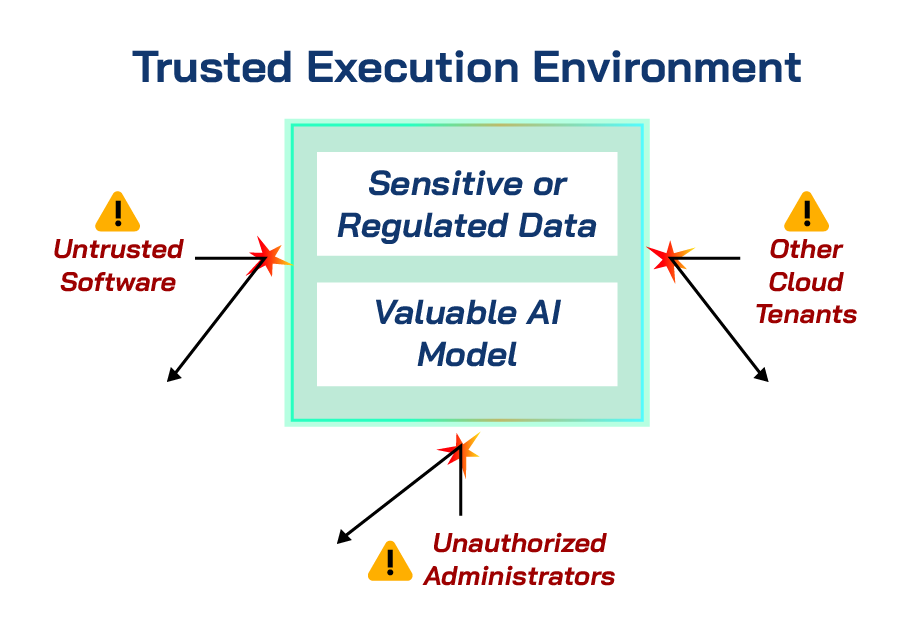
To secure AI workloads, Confidential AI leverages Confidential Computing technologies such as TEEs to protect data while it is in use. Trusted Execution Environments (TEEs) provide isolated and protected execution spaces where sensitive, regulated data, and valuable AI models are shielded from unauthorized access by untrusted software, cloud tenants, and administrators. This hardware-assisted isolation provides a foundation for securing AI workloads in both enterprise and cloud environments.
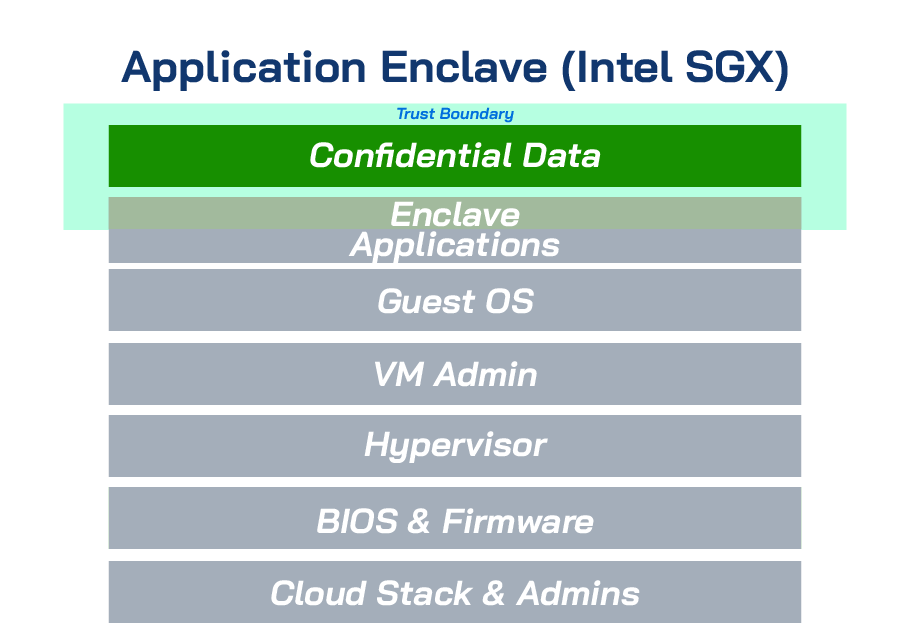
Available on supported Intel Xeon 6 processors, Intel Software Guard Extensions (Intel SGX) offers application-level protection through isolated enclaves that only code or functions running inside can access confidential data. It minimizes the attack surface and protects data in use through advanced isolation, encryption, and cryptographic attestation capabilities. This fine-grained approach is ideal for protecting specific functions or applications that handle AI workloads.
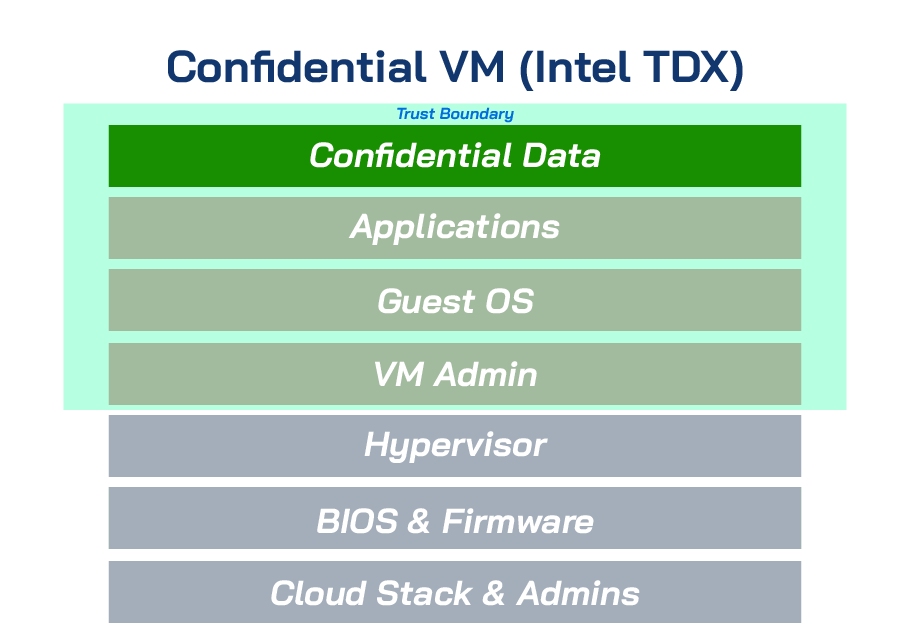
Powered by Intel Xeon 6 processors, Intel Trust Domain Extensions (Intel TDX) delivers hardware-enforced isolation at the virtual machine (VM) level. It shields confidential data, guest OS, and applications from access by the cloud host, hypervisor, management stack, and other VMs. Compared with SGX, TDX establishes a broader trust boundary around the virtual machine which simplifies the transition of existing applications to a confidential computing environment without requiring code changes in most cases.
Summary
By leveraging Intel security technologies such as SGX and TDX, AEWIN offers high-performance servers based on Intel Xeon 6 processors that provide a hardware foundation for Confidential AI. Featuring security capabilities designed to protect data and AI workloads, AEWIN’s comprehensive server portfolios empower enterprises and cloud service providers to build a trusted AI infrastructure.