

2022.02.22

Introduction of Intel® Optane™ Persistent Memory (PMem)

Share:

With nearly everything connected, the trend of big data is continuously rising and migrating to the cloud. Servers of edge computing and cloud/ virtualization need to handle enormous amount of data for numerous IIoT/ 5G clients. To accomplish the demands, there is growing needs of jumbo memory.

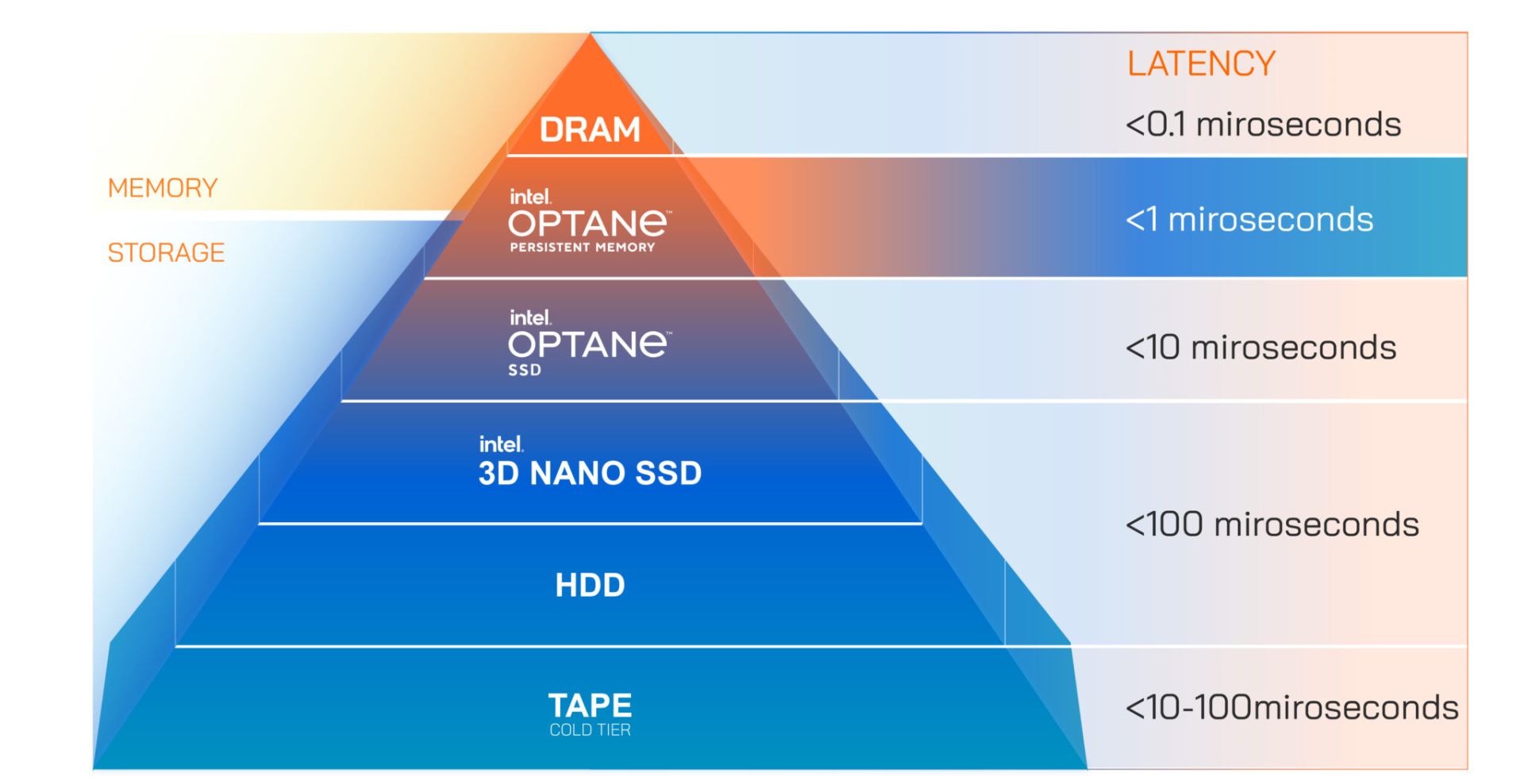
Intel® Optane™ persistent memory (PMem) provides the affordable large capacity of memory to the demands. In addition to the bigger capacity of memory, the new memory also offers the option of supporting data persistence based on 3D Xpoint flash technology. Platforms with 3rd Gen Intel® Xeon® Scalable Processors can support Intel® Optane™ PMem 200 series.
ALL_news_tech_blog_26A12_YXchhlPaxa

Intel® Optane™ PMem 200 series can deliver up to 512GB per DIMM slot. It is flexible with two modes: Memory Mode & Application Direct Mode.

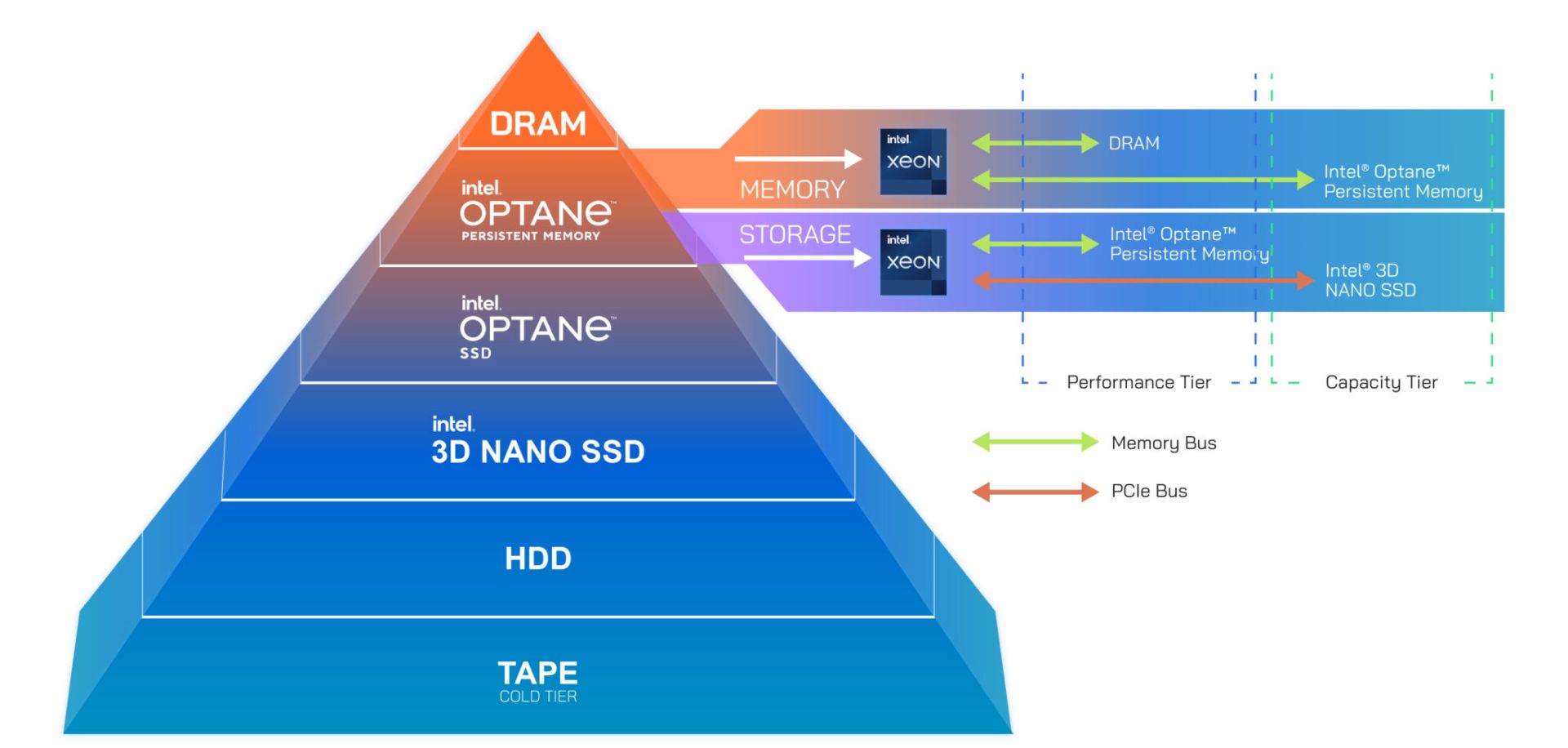
Memory Mode (MM): PMem Volatile

In Memory Mode, the CPU memory controller sees all Optane™ Memory as volatile system memory and the CPU uses DRAM as a fast cache for Optane™ PMem. In MM mode, it can access more data at DRAM-like speeds to increase the utility of each server and it is transparent to the application. With the greater memory capacity per socket compared to DRAM, Optane™ PMem supports bigger datasets at a lower cost and has better operational efficiencies.

APP Direct Mode (AD): PMem Persistent

In App Direct Mode, there are two separate pools of memory, one is DRAM and the other is persistent memory. In AD mode, Optane™ PMem is with the persistent capacity for the data to be recall and permanent if the power is lost. Acting as high-speed storage, Optane™ PMem can conquer high I/O traffic for better workload performance with a persistent memory aware software and operating system.
ALL_news_tech_blog_26A12_cRwGPcGGKC

A hierarchical approach allows application developers to optimize the resources of the platform for data access and transport. In addition to the advantages mentioned for both modes of Optane™ PMem, it also features enhanced data protection based on the encryption of AES-256. Hardware-enabled encryption on Ice Lake SP processors brings out strong, industry-standard data security with low impact on performance.

To support the latest Intel Optane Persistent Memory 200series modules, AEWIN offers many platforms with the Intel 3rd Gen Xeon Processors. To understand more benefits of AEWIN’s platforms, please check out the product details in the following links. You are more than welcome to contact AEWIN’s friendly Sales at any times.

  • BIS-5221 (2U Rack Mount, 2-socket, 32 memory DIMMs w/ 16 channels)
  • BIS-5101 (4.5U Rack Mount/ Tower, 1-socket, 8 memory DIMMs w/ 8 channels)

  • SCB-1932 (2U Rack Mount, 2-socket, 16 memory DIMMs w/ 16 channels)
  • SCB-1933 (2U Rack Mount, 1-socket, 8 memory DIMMs w/ 8 channels)

  • SCB-1931 (1U Rack Mount, 1-socket, 8 memory DIMMs w/ 8 channels)
ALL_news_tech_blog_26A12_sp8a175z9W

Related News

Architecting Rack-Scale AI Infrastructure for the Neocloud Era
2026.09.24

Architecting Rack-Scale AI Infrastructure for the Neocloud Era

Generative and agentic AI applications, coupled with intensifying training and inference workloads, demand unprecedented compute throughput, memory, networking, and storage. Consequently, infrastructure can no longer be designed around isolated servers. The rise of specialized Neocloud providers further accelerates this shift toward rack-scale architecture, where compute, networking, and thermal management must converge to yield efficient, adaptable AI capacity.

Scalable Infrastructure for AI and Cloud-Native Applications
2026.09.09

Scalable Infrastructure for AI and Cloud-Native Applications

As AI adoption and cloud-native applications reshape enterprise IT, infrastructure must support increasingly diverse and dynamic workloads. From virtualization and distributed services to data-intensive applications, modern data centers require a balanced foundation of compute, memory, storage, and I/O performance. As workload demands continue to evolve, the infrastructure has to be built with superior scale and efficiency.

High-Density AI Infrastructure: Scaling Performance with Advanced Cooling Solutions
2026.09.02

High-Density AI Infrastructure: Scaling Performance with Advanced Cooling Solutions

As AI workloads demand greater processing power, data centers must achieve higher compute density and superior thermal efficiency while minimizing space and energy footprints. Integrating high-power CPUs and GPUs into compact server platforms makes advanced thermal management a critical factor in sustaining performance and optimizing infrastructure efficiency.

Inquiry Cart

total 0 items

Compare

total 0 items

Email Subscribe

Verification

Click the numbers from smallest to largest.

We use cookies to allow our website to work properly, personalize content and advertising, provide social media features and analyze traffic. We also share information about your use of our site with our social media, advertising and analytics partners

Manage Cookies

Privacy Settings

We use cookies to allow our website to work properly, personalize content and advertising, provide social media features and analyze traffic. We also share information about your use of our site with our social media, advertising and analytics partners

Privacy Policy

Manage Consent Settings

Essential Cookies

Accept All

The website cannot function without these cookies and you cannot switch them off on your system.

These cookies are typically set only in response to an action you perform (i.e. a service request), such as setting privacy preferences, logging in, or filling in a form.

You can set your browser to block or prompt you for these cookies, but this may prevent some site features from working.