

2021.06.10

One Touch Bypass

Share:

AEWIN is announcing the latest iteration of our network bypass technology, the One Touch Bypass. Internet access is essential to the modern business, where it handle almost every form of communication to the outside world. It has enabled instant interactions across the globe using instant messaging, telephony, and the basic email. Internet connection has become the lifeline of businesses and ensuring access is mission critical. AEWIN One Touch Bypass function allows a system and Network Expansion Module to switch over to bypass-mode as long as the system is receiving power, regardless of whether it is powered on or off. This enhancement comes with the wider adoption of on-board BMC (Baseboard Management Controller).

In a fully functional system, network packets entering the system via LAN1. Packets are processed then sent to downstream device via LAN2. In the event of system unavailability, the BMC and onboard MCU inside the Network Expansion Module works independently of the host system and interconnects LAN1 and LAN2 to allow packets to move straight through, bypassing the system. In failed system without Bypass functionality, it would act as a roadblock to the network connection and sever the critical communication link. By using LAN Bypass equipped systems and Network Expansion Modules, we can pass the packets downstream to route around the failure. This is a cost-effective plan for non-essential network functions, such as those for network optimization, load balancing, or sniffers for network telemetry. For critical network security devices, the Bypass can be used to route the traffic to a redundant device to maintain the security perimeter.

One Touch Bypass is accessed through a physical switch to signal the BMC to initiate the bypass process, and after turning on it will continue to function in this mode even if the host system has been powered off. There are additional modes that can be configured in the MCU, where you can force disconnection with the Drop mode and Link-Loss mode to diagnose network disconnections. With the right setting on the MCU, it can also act as an emergency network disconnect switch to immediately cut off upstream network access in event of severe intrusion or other security violations.

These are useful features to add to the toolkit of network administrators. With years of experience building network appliances, we see the Bypass function as one of the most cost-effective way to add more robustness and resilience to your network. It is invaluable by itself, but in conjunction with system redundancies, it can be a force multiplier that can increase the network resilience several fold.
Related News

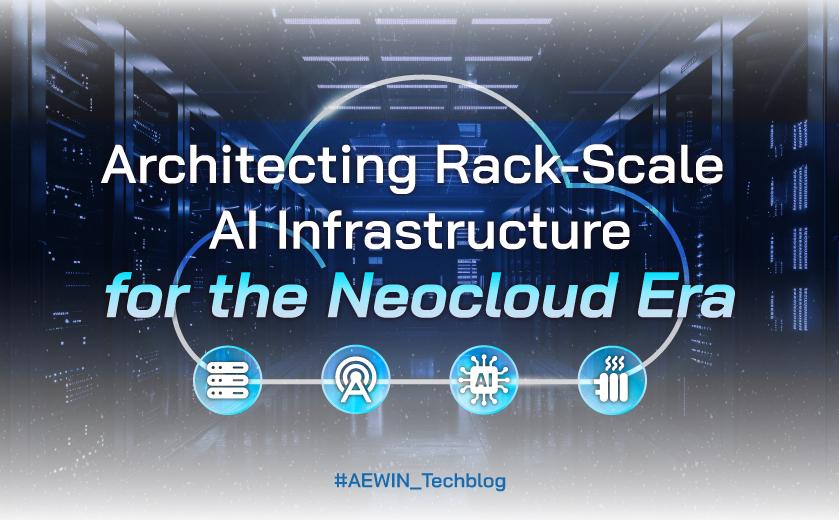
Architecting Rack-Scale AI Infrastructure for the Neocloud Era
2026.09.24

Architecting Rack-Scale AI Infrastructure for the Neocloud Era

Generative and agentic AI applications, coupled with intensifying training and inference workloads, demand unprecedented compute throughput, memory, networking, and storage. Consequently, infrastructure can no longer be designed around isolated servers. The rise of specialized Neocloud providers further accelerates this shift toward rack-scale architecture, where compute, networking, and thermal management must converge to yield efficient, adaptable AI capacity.

Scalable Infrastructure for AI and Cloud-Native Applications
2026.09.09

Scalable Infrastructure for AI and Cloud-Native Applications

As AI adoption and cloud-native applications reshape enterprise IT, infrastructure must support increasingly diverse and dynamic workloads. From virtualization and distributed services to data-intensive applications, modern data centers require a balanced foundation of compute, memory, storage, and I/O performance. As workload demands continue to evolve, the infrastructure has to be built with superior scale and efficiency.

High-Density AI Infrastructure: Scaling Performance with Advanced Cooling Solutions
2026.09.02

High-Density AI Infrastructure: Scaling Performance with Advanced Cooling Solutions

As AI workloads demand greater processing power, data centers must achieve higher compute density and superior thermal efficiency while minimizing space and energy footprints. Integrating high-power CPUs and GPUs into compact server platforms makes advanced thermal management a critical factor in sustaining performance and optimizing infrastructure efficiency.

Inquiry Cart

total 0 items

Compare

total 0 items

Email Subscribe

Verification

Click the numbers from smallest to largest.

We use cookies to allow our website to work properly, personalize content and advertising, provide social media features and analyze traffic. We also share information about your use of our site with our social media, advertising and analytics partners

Manage Cookies

Privacy Settings

We use cookies to allow our website to work properly, personalize content and advertising, provide social media features and analyze traffic. We also share information about your use of our site with our social media, advertising and analytics partners

Privacy Policy

Manage Consent Settings

Essential Cookies

Accept All

The website cannot function without these cookies and you cannot switch them off on your system.

These cookies are typically set only in response to an action you perform (i.e. a service request), such as setting privacy preferences, logging in, or filling in a form.

You can set your browser to block or prompt you for these cookies, but this may prevent some site features from working.